Best Air Purifiers of 2026
Compare air purifiers based on their applicable area, filter type, noise level, maintenance costs, and smart control features to help you choose a product that is more suitable for your daily indoor air management.
Reviewed by RateThePick Editorial Team · Updated
Top 5 Ranked Air Purifiers
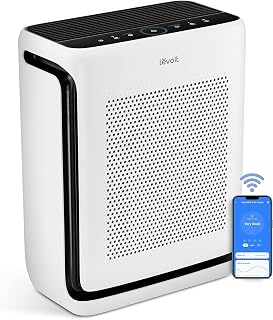
Levoit Vital 200S-P Smart Air Purifier
Best for: It is best for shoppers who want a larger Levoit air purifier for bedrooms, living rooms, pet areas, or open spaces, especially if they value automatic fan adjustment, scheduling, and remote control through the VeSync app.
Pros
- • CADR figures include smoke 250 CFM, dust 254 CFM, and pollen 289 CFM
- • Washable pre-filter helps capture larger particles such as hair, lint, and dust
- • U-shaped air inlet is designed for pet fur and helps reduce clogging
Things to Consider
Larger footprint than compact tabletop or small-bedroom purifiers

PuroAir 130i Smart HEPA Air Purifier
Best for: It is best for shoppers who want a compact air purifier for a bedroom, office, nursery, dorm, or pet area and who like the convenience of phone controls, schedules, and filter reminders.
Pros
- • Rated to clean rooms up to 600 sq ft in one hour
- • 3-layer HEPA and CarbonTech filtration targets dust, pollen, smoke, pet dander, and odors
- • Wi-Fi app control supports scheduling and filter notifications
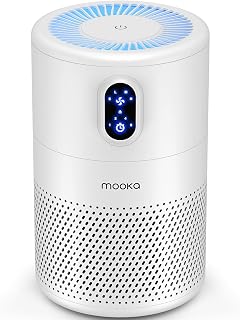
MOOKA B-D02L Air Purifier
Best for: It is best for shoppers who want a simple, compact HEPA-style air purifier for a bedroom, small living area, home office, pet corner, or room where dust, smoke, pollen, and everyday odors are common concerns.
Pros
- • 3-stage filtration with pre-filter, H13 HEPA filter, and activated carbon layer
- • Claimed coverage up to 1076 sq ft with more frequent air changes in smaller rooms
- • Four fan modes and 1, 2, 4, and 8 hour timer options
Things to Consider
Best faster-cleaning performance is more realistic in smaller spaces than the maximum claimed coverage area

PuroAir 240 HEPA Air Purifier 2-Pack
Best for: This bundle is best for households that want matching purifiers for bedrooms, offices, pet areas, or living spaces rather than moving one purifier from room to room. It is especially practical for shoppers who value automatic air-quality sensing, quiet low-speed operation, and simple filter-change reminders.
Pros
- • Two matching PuroAir 240 units for covering separate rooms or zones
- • Three-layer filtration with pre-filter, HEPA filter, and activated carbon
- • Auto mode adjusts fan speed based on detected air quality
Things to Consider
Very large open spaces may require more realistic placement expectations.

Afloia Kilo 3-Stage Air Purifier
Best for: It is best for shoppers who want a straightforward air purifier for a bedroom, home office, nursery, or pet area and prefer easy controls over connected features. Its stronger room-sizing reference is about 269 sq ft at four air changes per hour, while the larger 1076 sq ft figure is better understood as a slower one-hour refresh claim.
Pros
- • 3-stage filter system for common household particles and odors
- • CADR-based room use is clearly stated for 269 sq ft spaces
- • Sleep mode is rated at a quiet 22 dB
Things to Consider
No built-in air-quality sensor or smart app control on the standard Kilo model
Overview of Air Purifiers
Buying in the Air Purifiers category usually comes down to room coverage, filter type, and noise level. Most shoppers are trying to reduce airborne particles in a bedroom, office, or living area without adding distracting sound, so a useful comparison starts with how the product will fit into a real routine. A feature-rich option can be worthwhile, but only when the basics fit your space, skill level, and maintenance expectations.
The strongest matches tend to separate by use case: allergy seasons, pet households, and sleep spaces. Before deciding, compare larger coverage versus footprint, higher fan speeds versus quiet operation, and smart sensors versus filter cost. Those details can matter more than a long spec sheet, especially if the purifier will run near a bed, desk, or shared living area.
- Match room coverage to your primary use.
- Check filter type against your setup and space.
- Consider upkeep, storage, and everyday convenience.
Top Air Purifiers
A ranked buying guide for the Air Purifiers category helps narrow similar options by showing where each one is strongest. Some models lean toward allergy seasons, while others make more sense for pet households or sleep spaces. That makes it easier to focus on the differences that change ownership experience, not just the most eye-catching specification.
Use the ranking to compare room coverage, filter type, and noise level side by side, then weigh the tradeoffs around larger coverage versus footprint, higher fan speeds versus quiet operation, and smart sensors versus filter cost. A lower-ranked option may still be a smart fit if it matches your room, vehicle, routine, or comfort level better than a higher-scoring alternative.
For the most confident choice, start with your nonnegotiables, then look for the option with the fewest compromises in daily use.
Air Purifiers FAQ
What should I look for in Air Purifiers?+
Start with room coverage, filter type, and noise level. Then think about whether the choice can reduce airborne particles in a bedroom, office, or living area without adding distracting sound. The best match is usually the option that handles normal use comfortably, fits the space or setup you already have, and avoids features you will rarely use. Published specs are helpful, but they should be checked against storage, installation, cleaning, and who will use it most.
How do I choose the right size or capacity for Air Purifiers?+
Use measurements and capacity ratings as a first filter, then compare them with your actual space, users, or equipment. For Air Purifiers, match stated coverage and clean air delivery to room size, door position, and expected fan speed. Leave some margin for comfortable use and access, because a tight fit can turn an otherwise strong option into a daily annoyance.
Which Air Purifiers features are worth prioritizing?+
Prioritize features that reduce friction every time you use the product. For this category, that often means true HEPA-style filtration, carbon layers for odors, sleep modes, filter indicators, and easy replacements. Extras are useful when they support your routine, but they should not outweigh fit, reliability signals, and ease of setup. If two options look similar, choose the one with clearer controls and specifications that match your main use case.
What tradeoffs matter most with Air Purifiers?+
Common tradeoffs include larger coverage versus footprint, higher fan speeds versus quiet operation, and smart sensors versus filter cost. A more compact option may be easier to store but less comfortable or powerful, while a heavier model may feel sturdier but require more planning. Treat those compromises as practical choices rather than flaws; the right balance depends on how often you will use it and what you can comfortably manage.
How much setup or maintenance should I expect?+
Read the setup requirements before buying and make sure you have the space, tools, or help needed. For Air Purifiers, filters need replacement on schedule, and the unit needs open airflow around the intake and outlet. Maintenance should also match your routine; items that are easy to clean, inspect, move, or store are more likely to stay useful over time.