Best Emergency Backup Power of 2026
Compare the capacity, output interface, charging method, portability, and applicable devices of emergency backup power supplies to help you choose a product that is more suitable for your power outage or outdoor emergency needs.
Reviewed by RateThePick Editorial Team · Updated
Top 5 Ranked Emergency Backup Power

BLUETTI Elite 30 V2 Portable Power Station
Best for: It is best for shoppers who want a small, easy-to-carry backup battery for phones, laptops, routers, lights, cameras, fans, and small outdoor gear. It also fits campers and road-trippers who need more power than a basic power bank but do not want to carry a large battery generator.
Pros
- • 288Wh LiFePO4 battery in a compact, travel-friendly body
- • 600W continuous AC output with 1,500W Power Lifting mode for compatible loads
- • 140W USB-C port is useful for laptops, tablets, and fast device charging
Things to Consider
288Wh capacity is better for short backup needs than long appliance runtime

Jackery Explorer 1000 v2 Portable Power Station
Best for: It is best for shoppers who want a portable backup battery that can run or recharge common essentials such as phones, laptops, lights, fans, small kitchen appliances, and some refrigerators, while still being manageable to carry at around 23.8 lb.
Pros
- • 1070Wh LiFePO4 battery chemistry with a published 4000-cycle rating to 70%+ capacity.
- • 1500W rated AC output and 3000W surge peak support a wide range of small appliances and electronics.
- • Three AC outlets plus USB-C, USB-A, and 12V car output cover common charging needs.
Things to Consider
The 1070Wh capacity is useful, but it is not intended to replace a full home backup system.

Arkpax Core 300W Portable Power Station
Best for: It is best for shoppers who want a lightweight backup battery for phones, tablets, laptops, cameras, lamps, routers, small fans, and other devices that stay within the 300W output limit. Its under-9-pound class design makes it especially useful for car camping, day trips, backyard use, and keeping essential electronics topped up.
Pros
- • 192Wh LiFePO4 battery for a compact, travel-friendly power setup
- • 300W pure sine wave AC output with 600W surge rating for small electronics
- • Six output options including two AC outlets, USB-C, USB-A, and a car socket
Things to Consider
192Wh capacity is meant for small devices, not long-running household appliances

APC Back-UPS Pro BX1500M 1500VA/900W UPS, 10 Outlets
Best for: Home and small-office users who want to keep a desktop PC, monitor, modem and router running through brief outages and short brownouts. It also suits anyone who wants a clear status screen and automatic computer shutdown. Because APC sells a replacement battery cartridge, it is a good fit for buyers who would rather swap a battery every few years than replace the whole unit.
Pros
- • 1500VA / 900W capacity with five battery-backed outlets and five surge-only outlets
- • Detailed LCD showing load, charge, estimated runtime, voltage and event information
- • AVR boosts low input voltage during modest brownouts without using the battery
Things to Consider
Battery output is a stepped approximation of a sine wave, not pure sine wave
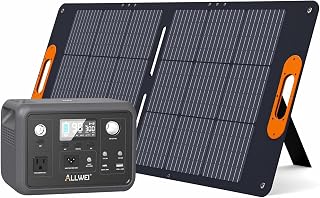
ALLWEI PPS300 256Wh Solar Generator Kit
Best for: It is best for buyers who want a lightweight solar generator for weekend camping, emergency phone and laptop charging, RV accessory use, or a small backup option during short outages. The included solar panel makes it especially practical for people who do not want to buy a compatible panel separately.
Pros
- • Includes a 100W solar panel with the 300W power station
- • 256Wh LiFePO4 battery with 300W continuous and 600W peak output
- • Pure sine wave AC output for many sensitive low-wattage electronics
Things to Consider
Runtime depends heavily on the wattage of each connected device
More Emergency Backup Power

Overview of Emergency Backup Power
Buying in the Emergency Backup Power category usually comes down to battery capacity, surge and running wattage, and recharge options. Most shoppers are trying to keep essential devices powered during outages without choosing more complexity than you can manage, so a useful comparison starts with how the product will fit into a real routine. A feature-rich option can be worthwhile, but only when the basics fit your space, skill level, and maintenance expectations.
The strongest matches tend to separate by use case: short outages, refrigerator or internet backup, and storm preparation. Before deciding, compare higher capacity versus weight, fuel-free indoor use versus slower recharge, and gas generator power versus ventilation requirements. Those details can matter more than a long spec sheet, especially if you need to prioritize only the devices that matter most during an outage.
- Match battery capacity to your primary use.
- Check surge and running wattage against your setup and space.
- Consider upkeep, storage, and everyday convenience.
Top Emergency Backup Power
A ranked buying guide for the Emergency Backup Power category helps narrow similar options by showing where each one is strongest. Some models lean toward short outages, while others make more sense for refrigerator or internet backup or storm preparation. That makes it easier to focus on the differences that change ownership experience, not just the most eye-catching specification.
Use the ranking to compare battery capacity, surge and running wattage, and recharge options side by side, then weigh the tradeoffs around higher capacity versus weight, fuel-free indoor use versus slower recharge, and gas generator power versus ventilation requirements. A lower-ranked option may still be a smart fit if it matches your room, vehicle, routine, or comfort level better than a higher-scoring alternative.
For the most confident choice, start with your nonnegotiables, then look for the option with the fewest compromises in daily use.
Emergency Backup Power FAQ
What should I look for in Emergency Backup Power?+
Start with battery capacity, surge and running wattage, and recharge options. Then think about whether the choice can keep essential devices powered during outages without choosing more complexity than you can manage. The best match is usually the option that handles normal use comfortably, fits the space or setup you already have, and avoids features you will rarely use. Published specs are helpful, but they should be checked against storage, installation, cleaning, and who will use it most.
How do I choose the right size or capacity for Emergency Backup Power?+
Use measurements and capacity ratings as a first filter, then compare them with your actual space, users, or equipment. For Emergency Backup Power, add up starting watts, running watts, and expected hours of use for each essential device. Leave some margin for comfortable use and access, because a tight fit can turn an otherwise strong option into a daily annoyance.
Which Emergency Backup Power features are worth prioritizing?+
Prioritize features that reduce friction every time you use the product. For this category, that often means clear wattage ratings, enough outlet types, battery status displays, solar or wall recharge options, and overload protection. Extras are useful when they support your routine, but they should not outweigh fit, reliability signals, and ease of setup. If two options look similar, choose the one with clearer controls and specifications that match your main use case.
What tradeoffs matter most with Emergency Backup Power?+
Common tradeoffs include higher capacity versus weight, fuel-free indoor use versus slower recharge, and gas generator power versus ventilation requirements. A more compact option may be easier to store but less comfortable or powerful, while a heavier model may feel sturdier but require more planning. Treat those compromises as practical choices rather than flaws; the right balance depends on how often you will use it and what you can comfortably manage.
How much setup or maintenance should I expect?+
Read the setup requirements before buying and make sure you have the space, tools, or help needed. For Emergency Backup Power, charge the unit on a schedule, test the setup before storm season, and store cords where you can find them. Maintenance should also match your routine; items that are easy to clean, inspect, move, or store are more likely to stay useful over time.
Fuel-burning generators must never run indoors or in enclosed spaces because exhaust can be deadly.